
The Infrastructure Myth: Why You Haven't Shipped It Yet
Why You Haven't Shipped It Yet
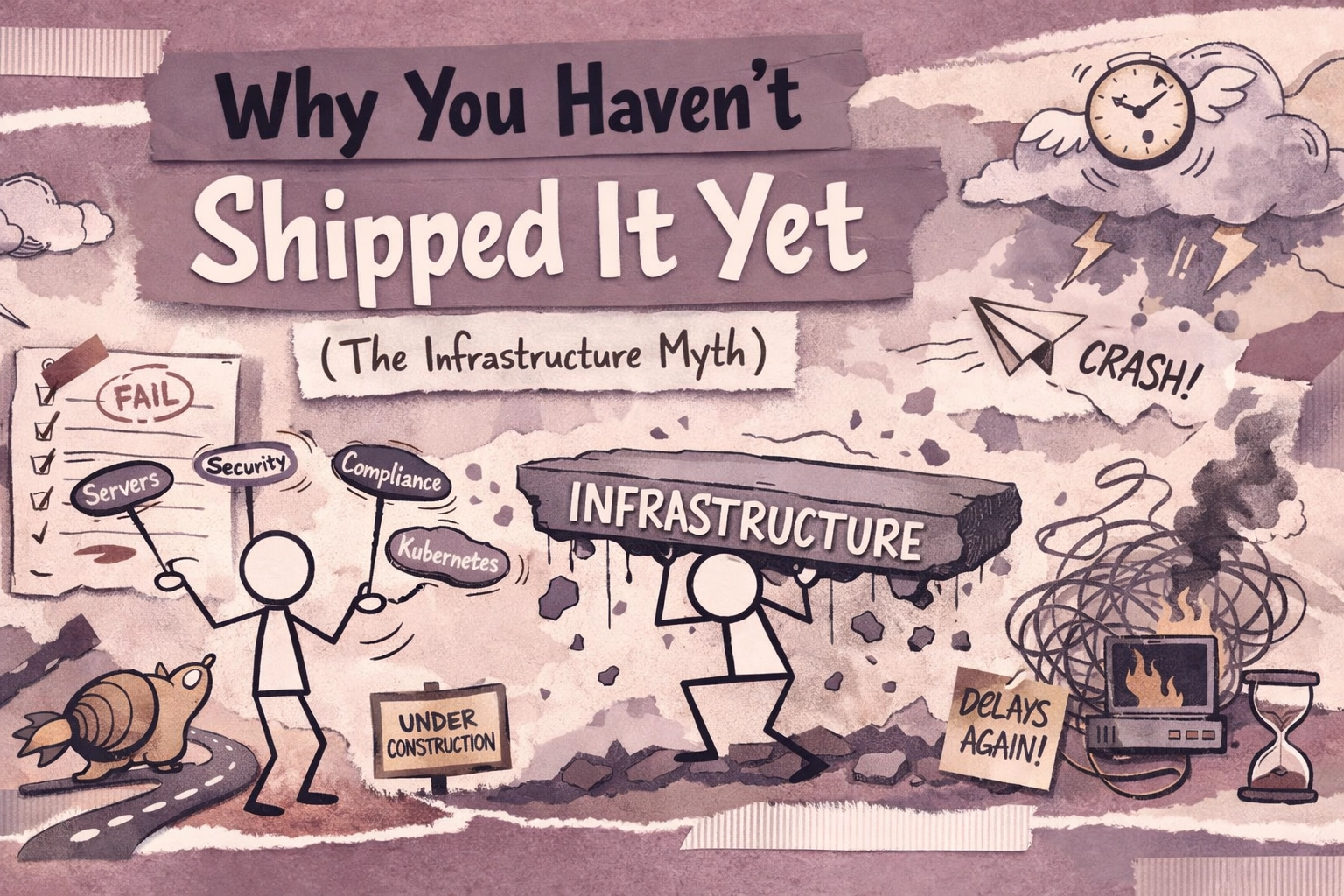
Most people who say they're building are actually performing "builder." The 4 AM wake-ups, the productivity apps, the endless positioning work — it looks like progress. It isn't.
The 4 AM wake-ups. The productivity apps. The "one more course" before you launch. The endless refining of your offer, your pitch, your positioning. You tell yourself you're being strategic. You're being thorough.
You're hiding.
And the worst part? You're doing it in plain sight. You're busy. You're exhausted. You're working harder than everyone around you. But nothing ships. Nothing lands. Nothing compounds.
You think you have a motivation problem. You actually have a plumbing problem.
The Triangulation Model: Why Vision and Willpower Aren't Enough
Most ambitious people operate with two legs of a three-legged stool:
- The Vision (The "What"): You know where you want to go. The business model. The revenue target. The lifestyle you're building toward. This part is clear.
- The Willpower (The "Fuel"): You've got drive. You're disciplined. You can push through discomfort. You've proven it a hundred times.
But here's what you're missing:
- The Infrastructure (The "Engine"): The system that keeps going when your willpower runs out. The plumbing that makes execution automatic instead of heroic.
Peter Drucker said it plainly: "There is nothing so useless as doing efficiently that which should not be done at all." Most of you are doing the wrong work efficiently. You're optimizing your operator tasks instead of building the systems that would eliminate them.
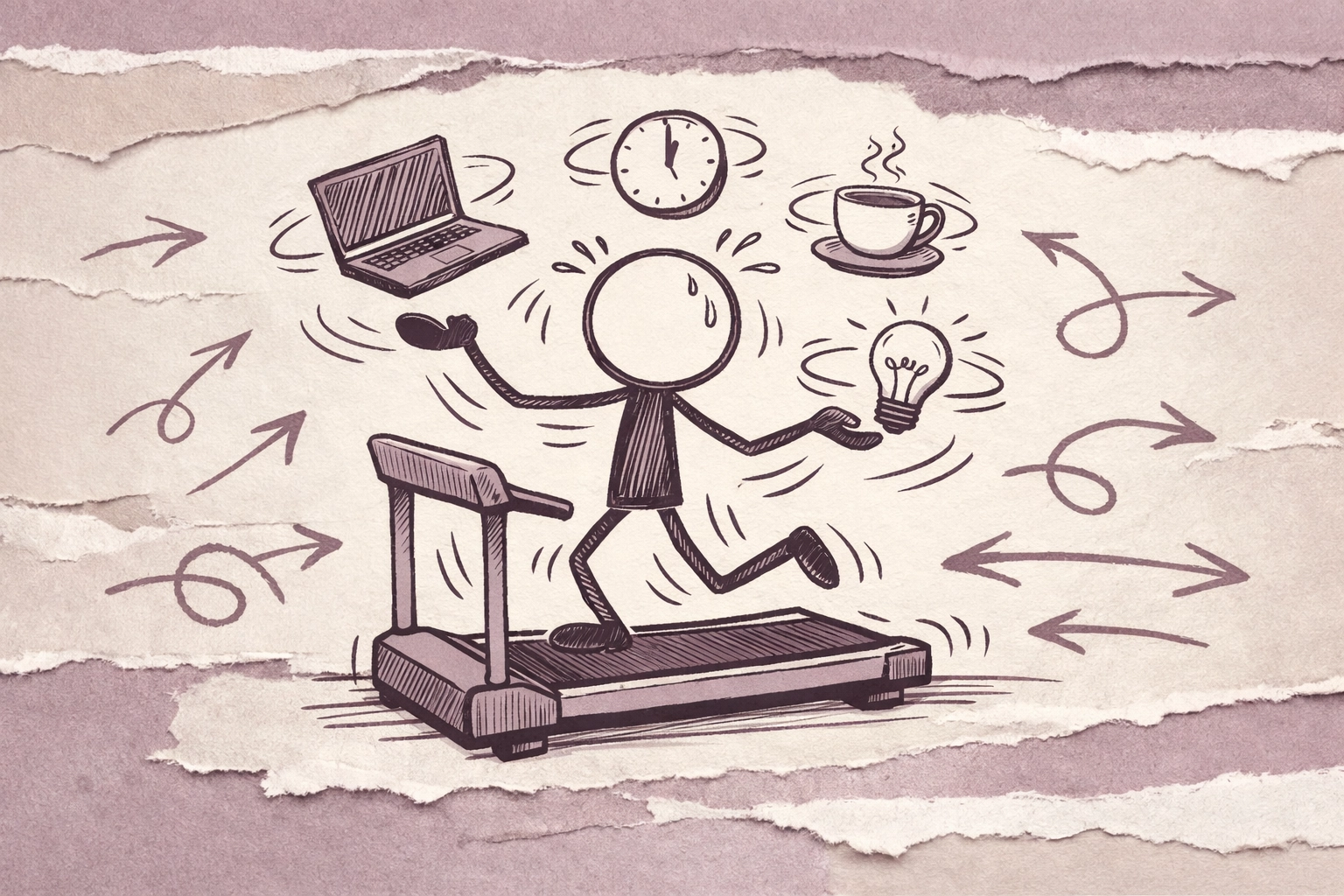
The Real Problem: Technical Intent Decay
Here's a concept from engineering strategy that will explain why your project is rotting in the "someday" folder: Technical Intent Decay.
When a project stays in the idea phase too long, it doesn't get better. It gets worse. The technical context shifts. Your assumptions become outdated. Your original insight loses its edge. The market moves. Your competition ships while you're still "validating."
I watched this happen to a client, brilliant strategist, ran a seven-figure consultancy. He'd been "almost done" with his flagship course for eighteen months. Every week, new ideas. Better frameworks. More refined positioning.
The course never launched.
Why? Because he kept layering aspiration on top of aspiration. More vision. More willpower. Zero infrastructure.
No production schedule. No accountability mechanism. No commitment device that made not shipping more painful than shipping imperfectly.
The project didn't improve over those eighteen months. It decayed. By the time he finally launched (after we built the system together), he had to scrap 60% of the "refinements" because they were solving problems from a market that no longer existed.
Dreaming about it is cheap. Building the system is expensive. Which is exactly why you haven't done it.
The Napkin Test: Can You Explain Your System in 30 Seconds?
Here's how you know you're over-complicating this:
If you can't explain your execution system on a napkin in under 30 seconds, you don't have a system. You have anxiety dressed up as strategy.
Naval Ravikant talks about leverage: code, media, capital, and labor. Most people chase the sexy leverage — the content, the funding, the team. But they skip the boring leverage: the plumbing that makes everything else work.
Your calendar. Your decision framework. Your commitment devices. Your accountability structure. The unglamorous plumbing that determines whether your ideas become assets or just expensive entertainment.
A Real-World Infrastructure Story: Amazon's Two-Pizza Teams
Amazon scaled without turning into a meeting-shaped puddle by making a very specific infrastructure decision early: small teams, on purpose. The "two-pizza team" rule (popularized by Jeff Bezos) was basically: if you can't feed the whole team with two pizzas, it's too big.
On paper, this sounds like culture fluff. In practice, it's an execution engine.
Because once teams get big, you don't just add people—you add translation tax:
- more "alignment" meetings
- more stakeholder drive-bys
- more opinions per square inch
- more situations where the work isn't hard, it's just socially complicated
I've lived this in global orgs where "simple" decisions had to survive five time zones, three layers of leadership, and the reality that "yes" means different things depending on the country and the personality in the room. Your intent starts crisp ("ship X by Friday"), and by the time it hits the actual doers it's become: "explore options for potentially shipping something adjacent to X, but don't break anything, and also make it impressive."
That's Intent Decay with a corporate badge.
Two-pizza teams were Amazon's way of reducing the distance between:
- decision → build → ship → learn
Fewer people means fewer communication links, which means less drift, which means faster cycles. Small teams also make it harder to hide. When it's 6–8 humans and one of them is you, "I was waiting on alignment" stops being a personality trait.
And here's the part founders miss: Amazon didn't "motivate" their way into speed. They engineered it structurally.
If you want the founder version of this, it's not "hire a team." It's: what's the smallest autonomous unit that can ship an outcome end-to-end without asking permission from ten ghosts? That's the plumbing.
When I work with founders stuck in the Operator trap, the first thing I check isn't their vision or their work ethic. It's their plumbing. Can they produce consistently without relying on motivation? Do they have constraints that force decisions? Is there a system that runs when they're tired, distracted, or doubting?
Usually, no.
The "Ship It or Kill It" Rule
Here's the only project management philosophy that matters: Ship it or kill it.
If you've been "working on" something for more than 90 days without shipping a version of it, you're not working on it. You're keeping it as a pet.
This isn't about rushing. It's about forcing the systems question early: What needs to be true for me to ship this? What's the minimum viable version that proves the concept? What constraints will force me to decide instead of deliberate?

The most productive period of my career was when I had a co-founder who asked me one question every Monday: "What are we shipping this week?" Not "What are we working on?" Not "What are we planning?" What are we shipping?
That single constraint changed everything. Because it forced the systems conversation. It made me build processes that could produce outcomes, not just activity.
Why "The Right Time" Is a Lie You're Telling Yourself
You're waiting for certainty. For the perfect positioning. For the moment when you feel "ready."
That moment doesn't exist.
The right time is when the system is built to handle the result.
Not when you feel confident. Not when the market is "ready." Not when you've taken one more course or read one more book.
When the system is in place to support execution.
Think about it: You've probably had a dozen great ideas in the last year. How many shipped? How many are still sitting in your "someday" list, slowly decaying while you tell yourself you're "not ready"?
The problem isn't the quality of your ideas. It's the absence of the system that would force those ideas into the world.
Union Square Ventures talks about the infrastructure/application cycle in tech: apps inspire infrastructure needs, which then enable new apps, which inspire new infrastructure. It's a feedback loop.
Your business needs the same cycle.
You can't build all your infrastructure before you ship. You ship, you learn what infrastructure you actually need, you build that, you ship better. Repeat.
But most of you are trying to skip the shipping part. You're building infrastructure in a vacuum, based on what you think you'll need rather than what your actual work demands.
That's the myth. You think you need the perfect infrastructure before you ship. Actually, you need to ship so you know what infrastructure to build.
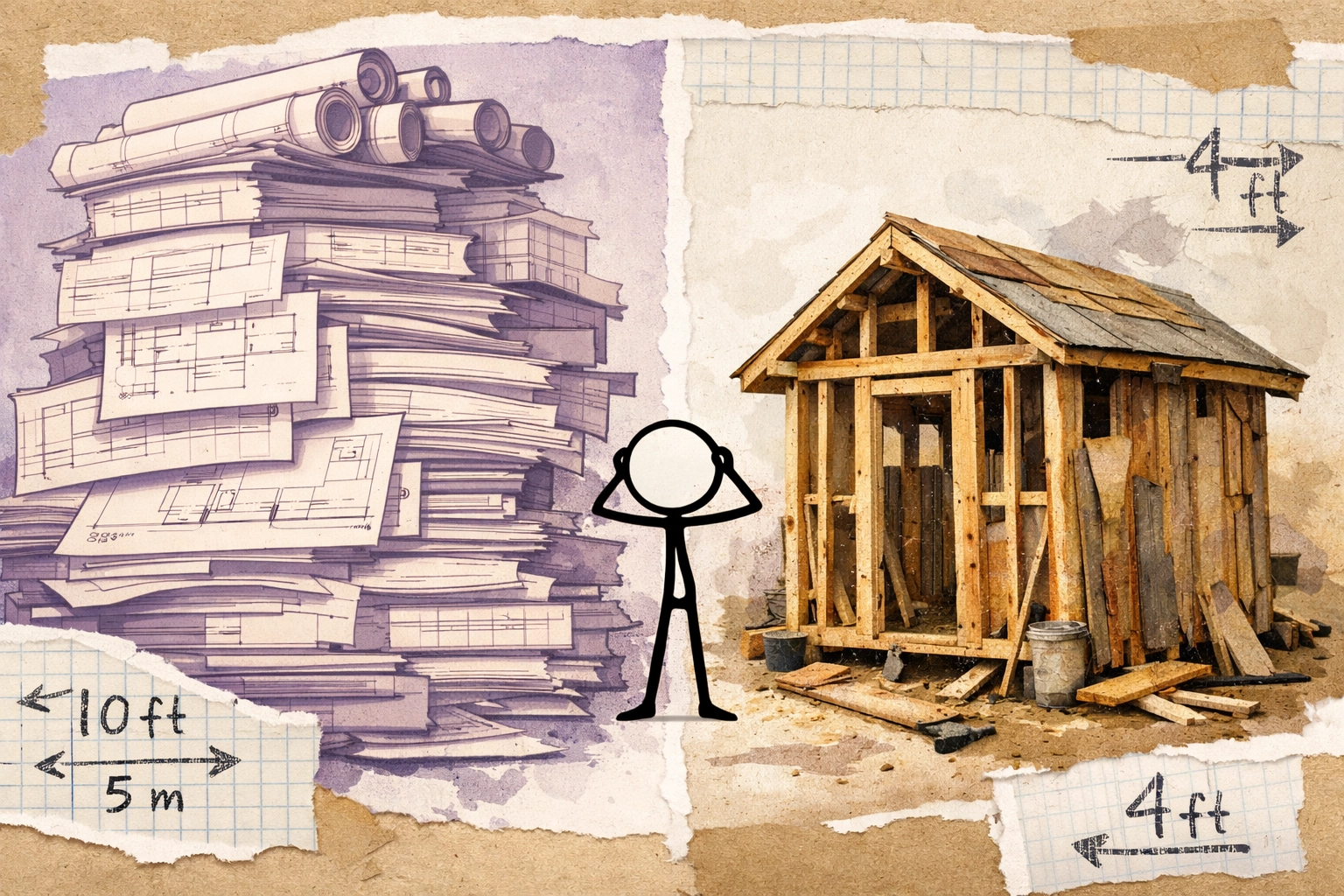
The Pile of Blueprints Problem
Imagine a massive pile of blueprints sitting next to a tiny, half-built shed.
That's your business.
The world doesn't pay for plans. It pays for finished floors. For doors that close. For roofs that don't leak when it rains.
Your vision is not an asset until it lives inside a system. And your expertise doesn't compound until it's captured in something that ships.
Stop adding to the blueprint pile. Start building the shed.
What Actually Changes This
You need three things:
1. A commitment device. Something that makes not shipping more painful than shipping. A deadline with stakes. A co-builder who's expecting your work. A public promise. Whatever creates real consequences for continuing to hide.
2. A forcing function. A constraint that eliminates the option to keep "refining." My favorite: a 48-hour sprint to ship the worst possible version of the thing you've been perfecting for months. I've never seen this fail to break the logjam.
3. Someone who gives a shit about your outcome. Not your effort. Not your intentions. Your outcome. Someone who will call you on your fake work and force the infrastructure conversation.
This is why the Operator-to-Owner shift requires systems, not inspiration. You already have the vision. You already have the willpower. What you need is the plumbing that makes shipping inevitable instead of optional.
You can keep telling yourself you're "almost there." You can keep adding to the blueprint pile. You can keep performing "builder" while nothing actually ships.
Or you can build the system that makes execution automatic. The calendar that forces decisions. The accountability that eliminates escape routes. The constraints that turn aspiration into assets.
The choice is yours. But make it fast. Because every day you wait, your project isn't getting better.
It's rotting.
References
- Drucker, Peter F. Quote commonly attributed to Drucker: "There is nothing so useless as doing efficiently that which should not be done at all."
- Ravikant, Naval. The Almanack of Naval Ravikant (leverage: code, media, capital, labor).
- Amazon/AWS. "Amazon's Two-Pizza Teams" (AWS Executive Insights): aws.amazon.com
- Amazon/AWS. "Two pizza teams, from Ops to DevOps" (AWS Whitepaper section): docs.aws.amazon.com