
From $5M in Lost Revenue to $2M in Annual Savings
How I led Heap's next-generation data platform transformation—turning infrastructure nightmares into our biggest competitive advantage.

Our legacy data architecture cost us over $5 million in lost enterprise deals. Within 18 months of our platform transformation, we saved $2 million annually while unlocking the scale we needed to support Enterprise customers with 10x data volume. This wasn't just a technical migration — it was a strategic product decision that fundamentally changed our market positioning and business trajectory.
As Principal Product Manager at Heap, I led the evaluation, selection, and implementation of our next-generation data platform. What started as a performance optimization project became a masterclass in strategic product leadership, vendor partnership, and business-driven technical transformation. Here's how we turned one of our biggest technical challenges into our greatest competitive advantage.
You can read the detailed technical case study here, but this article focuses on the strategic product management lessons that other leaders can apply.
When Infrastructure Becomes the Product Ceiling
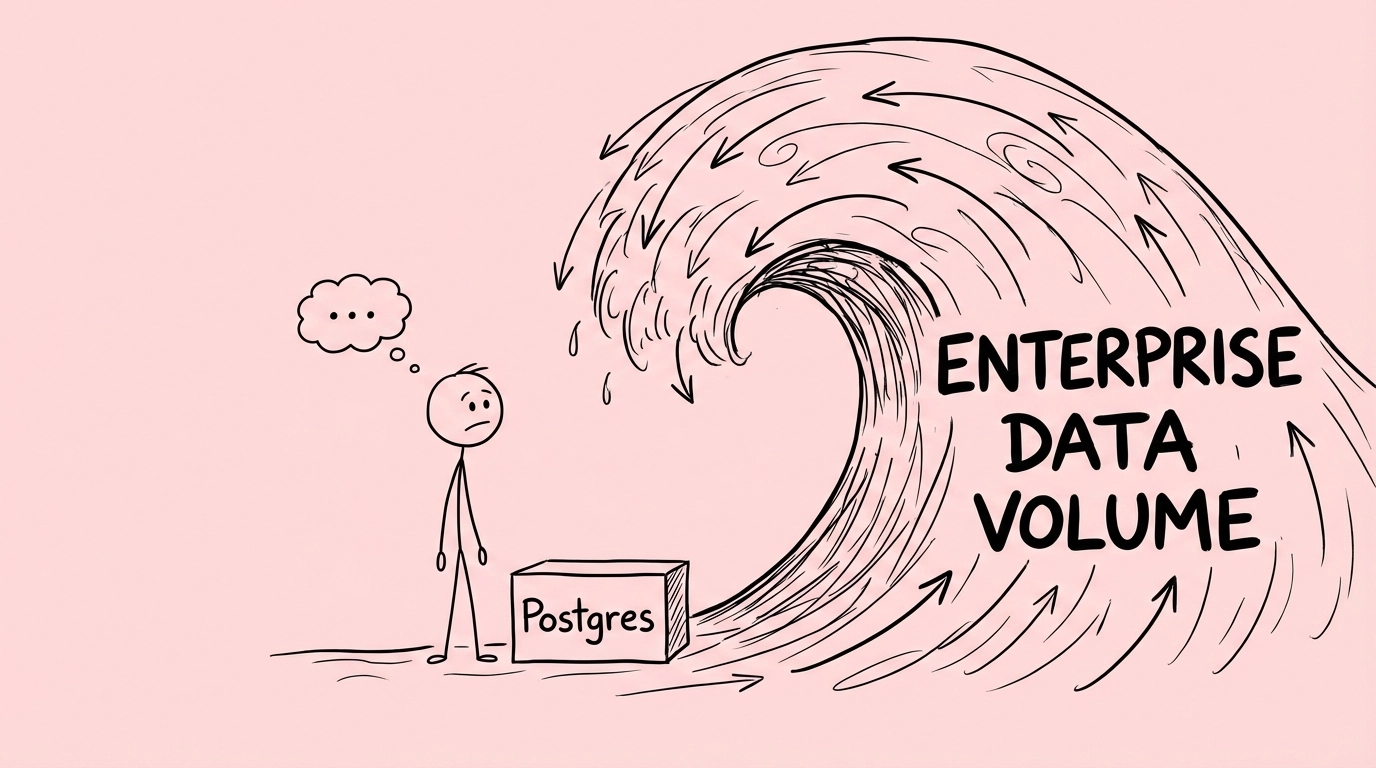
Most product managers think about infrastructure as a supporting layer — something engineering worries about while product focuses on features. I learned this perspective can be dangerously limiting when infrastructure constraints become the primary barrier to product strategy execution.
Our challenge at Heap wasn't subtle. We were built on PostgreSQL with CitusData, a solid foundation for our early years, but one that fundamentally misaligned with our product vision. PostgreSQL couples storage and compute, which meant every operational workload — data ingestion, maintenance tasks, analytics queries — competed for the same hardware resources. This architectural constraint created a cascading series of product limitations.
The most painful manifestation was our inability to build entire classes of analytics features. Account-based analysis, advanced user identity resolution, and complex funnel analytics required large-scale data shuffling operations that our infrastructure simply couldn't support without devastating performance impacts. We found ourselves in the product manager's nightmare scenario: saying no to customer requests not because we lacked product vision, but because our platform couldn't execute it.
The business impact was stark and measurable. We estimated over $5 million in lost revenue (with $1M in just one quarter) as enterprise prospects walked away when our platform couldn't meet their scale requirements. Our cost of goods sold hit nearly $3 million annually on infrastructure that couldn't grow with our ambitions. We were trapped in a technical architecture that prevented us from capturing the market opportunity we could see clearly ahead of us.
The complete technical analysis of our infrastructure challenges is documented in SingleStore's detailed case study.
This is where strategic product thinking diverges from purely technical problem-solving. Rather than optimizing within constraints, we needed to fundamentally reimagine our platform architecture to enable our product strategy. The question wasn't how to make PostgreSQL work better — it was how to build a data platform that could support Heap's next phase of growth.
Creating a Systematic Evaluation Framework
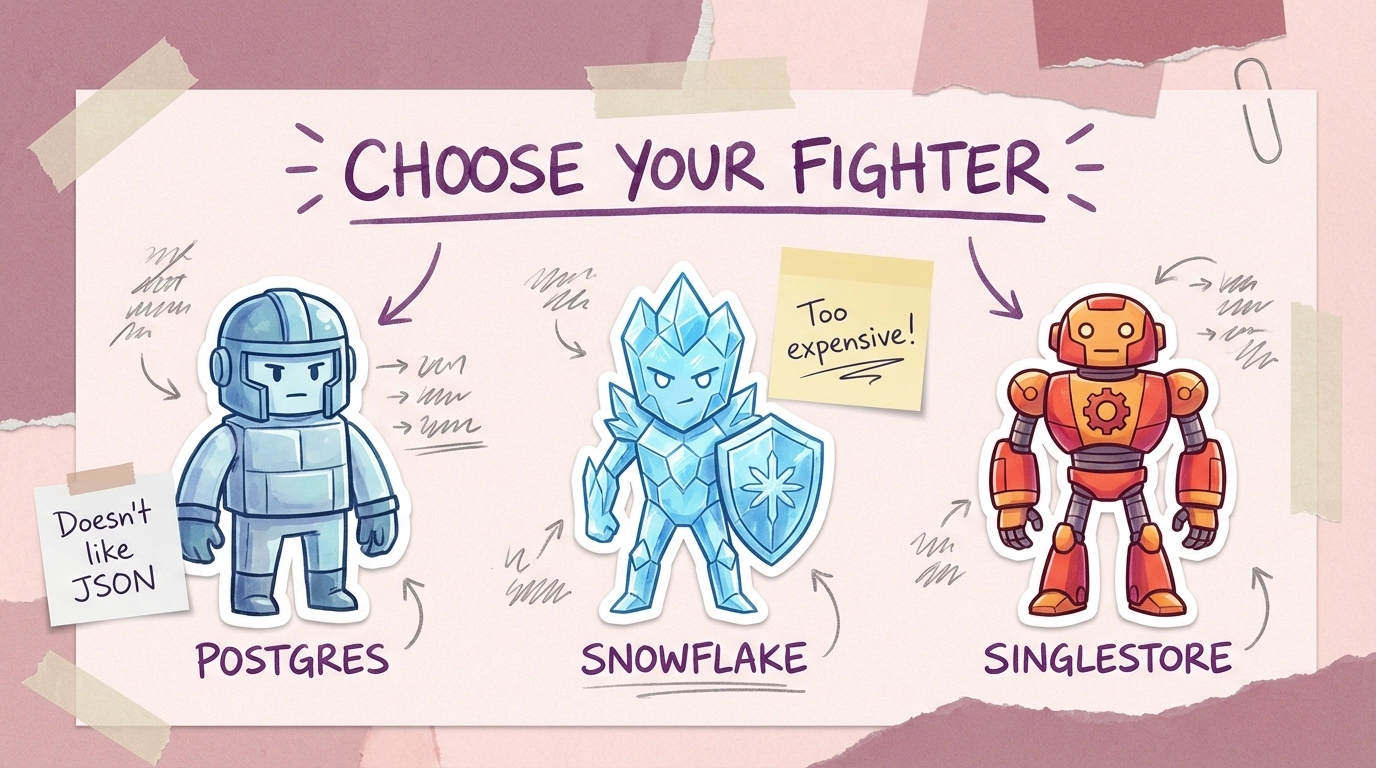
Evaluating database technologies requires a fundamentally different approach than typical vendor selection processes. Rather than leading with technical specifications, I started with business outcomes and worked backward to platform requirements.
We established four core evaluation pillars that would guide our decision-making: performance at scale, cost predictability, feature expressiveness, and partnership depth. Each pillar carried equal weight because optimizing for only one would create new constraints elsewhere.
| Pillar | What it meant for us | Strategic Goal |
|---|---|---|
| Performance at Scale | 3M events/sec peak, sub-second query response. | Build confidence for 10x growth. |
| Cost Predictability | No "surprise" consumption bills. | Maintain healthy margins. |
| Feature Expressiveness | Native JSON support, distributed joins. | Enable complex analytics (Identity resolution). |
| Partnership Depth | Architectural guidance and feature collaboration. | Long-term success vs. simple licensing. |
Performance at scale meant more than query speed benchmarks. We needed a platform that could handle 3 million events per second at peak load while maintaining sub-second query response times. More importantly, we needed performance that wouldn't degrade as we grew to 10x our current data volume. This wasn't just about handling today's workload efficiently — it was about building confidence in our ability to serve enterprise customers without architectural limitations.
Cost predictability proved equally critical. Several vendors offered impressive performance demos but opaque pricing models that made it impossible to forecast costs at scale. We needed to ensure our platform economics would improve as we grew, not create margin pressure that would force us to raise prices and lose competitive positioning.
Feature expressiveness addressed our core product differentiation. Heap's value proposition depends on complex analytical queries that traditional OLAP systems struggle with. We needed native JSON support for sparse data objects, user-defined function capabilities for custom analyses, and distributed join performance for identity resolution. A platform that forced us to compromise on analytical sophistication would undermine our product strategy.
Partnership depth became my fourth pillar after observing how vendor relationships shaped long-term success. We needed a partner who would invest in our use case, provide technical guidance during implementation, and collaborate on feature development rather than simply licensing existing capabilities.
With this framework, we evaluated twelve database platforms! Many were eliminated quickly — some coupled storage and compute like our existing solution, others only offered managed services when we needed self-hosted flexibility. Several couldn't support the shuffle operations required for our analytical workloads, while others lacked the JSON capabilities essential to our sparse data architecture.
The evaluation process revealed something crucial: most database vendors optimize for traditional OLAP workloads with denormalized single-table queries. Our product requirements demanded distributed joins, complex identity resolution, and real-time analytical processing that pushed beyond conventional data warehouse capabilities.
Strategic Vendor Selection
When our evaluation narrowed to SingleStore and Snowflake, the decision came down to strategic alignment rather than feature checklists. Both platforms offered strong performance, but only SingleStore demonstrated the partnership approach we needed for a transformation of this magnitude.
Snowflake's pricing model created immediate concerns about cost predictability. Their consumption-based pricing made it difficult to forecast expenses at scale, and we had limited control over cost optimization. This uncertainty was unacceptable. We needed infrastructure costs that would scale predictably with business growth.
| Feature | SingleStore | Snowflake |
|---|---|---|
| Pricing Model | Predictable (Cluster-based) | Consumption-based (Opaque) |
| JSON Performance | Superior for sparse data | Standard |
| Partnership | High (Architectural guidance) | Standard Vendor relationship |
| Deployment | Self-hosted flexibility | Managed service focus |
SingleStore's approach differed fundamentally. Beyond offering superior JSON performance and faster data ingestion, they engaged as true partners in our platform design. Their team provided architectural guidance during our proof-of-concept, helped debug implementation challenges, and committed to feature development that would enhance our specific use case.
This partnership orientation shaped our implementation strategy. Rather than a big-bang migration that would risk business continuity, we designed a bifurcated architecture that allowed gradual transition while maintaining service levels. Our approach separated query processing from data storage, with SingleStore serving as the analytical engine while we maintained our existing data lake for durability.
The multi-cluster architecture we implemented with SingleStore solved several strategic challenges simultaneously. By isolating customer workloads across clusters, we eliminated the "blast radius" problem where one customer's expensive queries could impact others. This capability directly enabled our enterprise sales strategy by providing the performance isolation large customers demand.
Geographic expansion became another strategic advantage. Our multi-cluster approach allowed us to create EU-region clusters for customers requiring data residency compliance, accelerating our international growth without architectural compromises.
Throughout implementation, SingleStore's partnership approach proved invaluable. When we encountered edge cases in JSON processing or needed optimization guidance for our specific workloads, their engineering team collaborated directly with ours. This wasn't vendor support — it was strategic partnership that enhanced our product capabilities.

The Measurable Business Impact

| Metric | Before (Legacy) | After (SingleStore) |
|---|---|---|
| Annual Savings | $0 | $2M+ |
| Data Latency | 1 Hour | 1 Minute |
| Data Volume Support | 1x | 10x |
| Enterprise Revenue Loss | $5M Lost | $0 (Zero Leakage) |
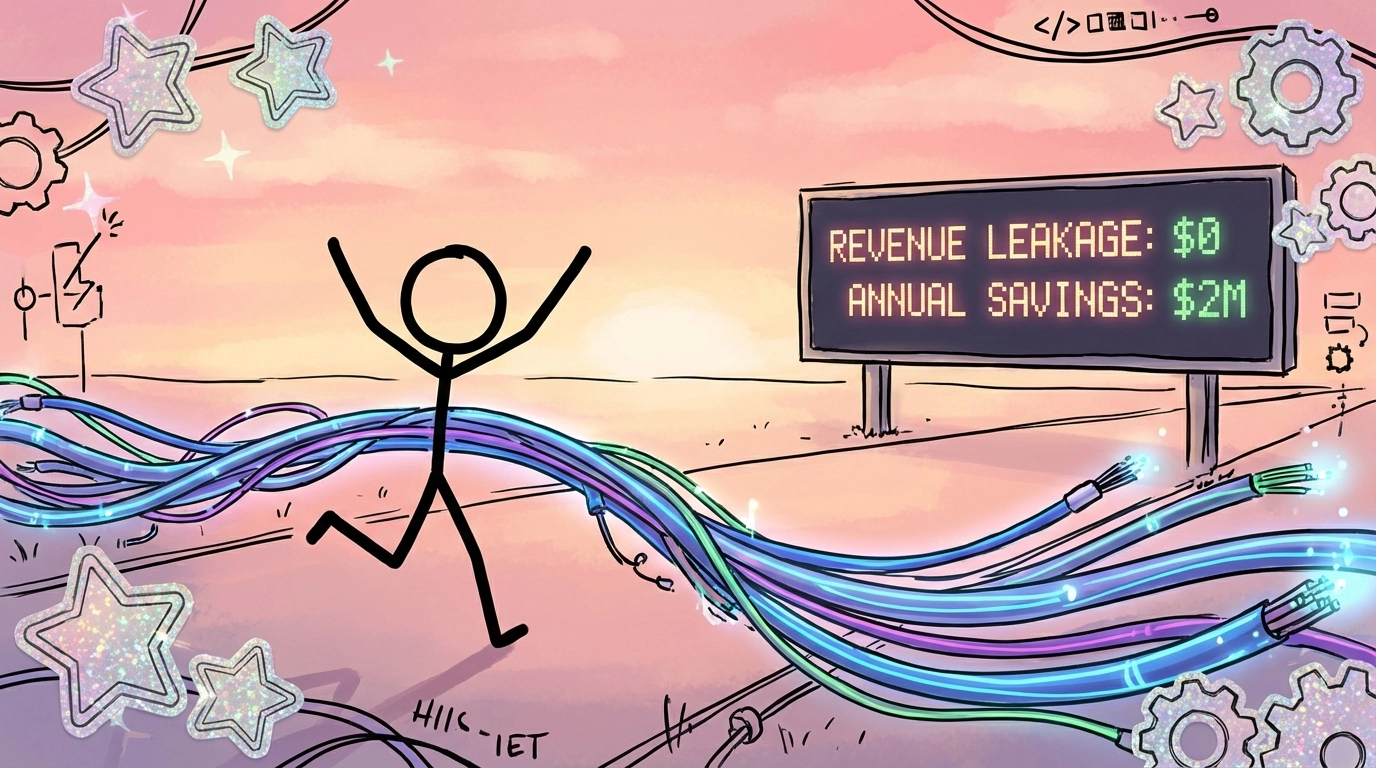
Our platform transformation delivered results that surpassed even our most optimistic projections. The initial rollout alone generated $2 million in annual cost savings while dramatically improving performance across every business-critical metric. More importantly, this represented just the baseline — we had already mapped out optimization strategies that would drive costs down by another 25%.
Data ingestion performance improved 60x during peak hours, reducing our end-to-end latency from data ingestion to queryability from one hour to one minute. This improvement directly enhanced customer experience and enabled real-time analytics capabilities that differentiated our product offering.
Query performance transformation was equally dramatic. We achieved sub-second average query duration while supporting 10x more data volume than our previous platform. This wasn't just about faster responses — it enabled entirely new classes of analytical features that were previously impossible due to performance constraints.
The cost structure transformation proved equally important for our business model. Our 25% reduction in cost of goods sold improved margins while our ability to handle 10x data volume meant we could confidently pursue enterprise customers without worrying about platform limitations. The combination of lower costs and expanded market addressability fundamentally improved our unit economics.
Perhaps most importantly, we eliminated the revenue leakage that had plagued our enterprise sales efforts. Our sales team could now confidently pursue large customers knowing our platform could scale to meet their requirements. The technical uncertainty that had cost us $5 million in lost deals was completely eliminated.
The operational improvements extended beyond pure performance metrics. Our engineering teams were unblocked to work on analytical features that had been impossible under our previous architecture. Product development velocity increased as we no longer needed to architect around infrastructure limitations.
Customer satisfaction improvements were measurable through higher NPS scores and improved retention rates. Customers who had been frustrated by performance limitations now experienced the near real-time insights they needed to compete effectively. Our platform's enhanced reputation in the market improved sales close rates and shortened deal cycles.
Strategic Lessons for Product Leaders
First, treat infrastructure decisions as product strategy decisions. Your platform capabilities directly constrain your product roadmap and market positioning. When infrastructure limitations prevent you from executing product strategy, the infrastructure becomes the product problem that demands immediate attention.
Second, evaluate vendors as partners, not just technology providers. The complexity of platform transformations requires deep collaboration that extends far beyond typical vendor relationships. Look for vendors who will invest in your success and collaborate on feature development rather than simply licensing existing capabilities.
Third, design implementation strategies that balance innovation with business continuity. Bifurcated architectures and gradual migration approaches allow you to capture new capabilities while maintaining service levels. The goal is transformation, not disruption.
Fourth, quantify business impact throughout the process. Platform transformations require significant investment and organizational commitment. Measuring and communicating business outcomes — cost savings, performance improvements, new market opportunities — maintains stakeholder support and validates strategic decisions.
The data platform landscape continues evolving rapidly, with new technologies promising even greater capabilities. However, the fundamental principles of strategic platform transformation remain constant: align technology decisions with business strategy, evaluate vendors as long-term partners, and measure success through business outcomes rather than technical metrics.
For product leaders facing similar platform constraints, the question isn't whether to transform — it's how to transform strategically. The companies that treat platform decisions as product strategy will build sustainable competitive advantages, while those that optimize within existing constraints will find their market opportunities increasingly limited by technical debt.
Our transformation at Heap proves that thoughtful platform strategy can turn technical limitations into business advantages. The key is recognizing when infrastructure becomes the ceiling on your product ambitions and having the strategic courage to rebuild the foundation for future growth.
Related Resources:
This article is my strategic product leadership perspective. For the technical details, see the official case study: