
The 80/20 Rule: Finding the 'Vital Few' in a World of Noise
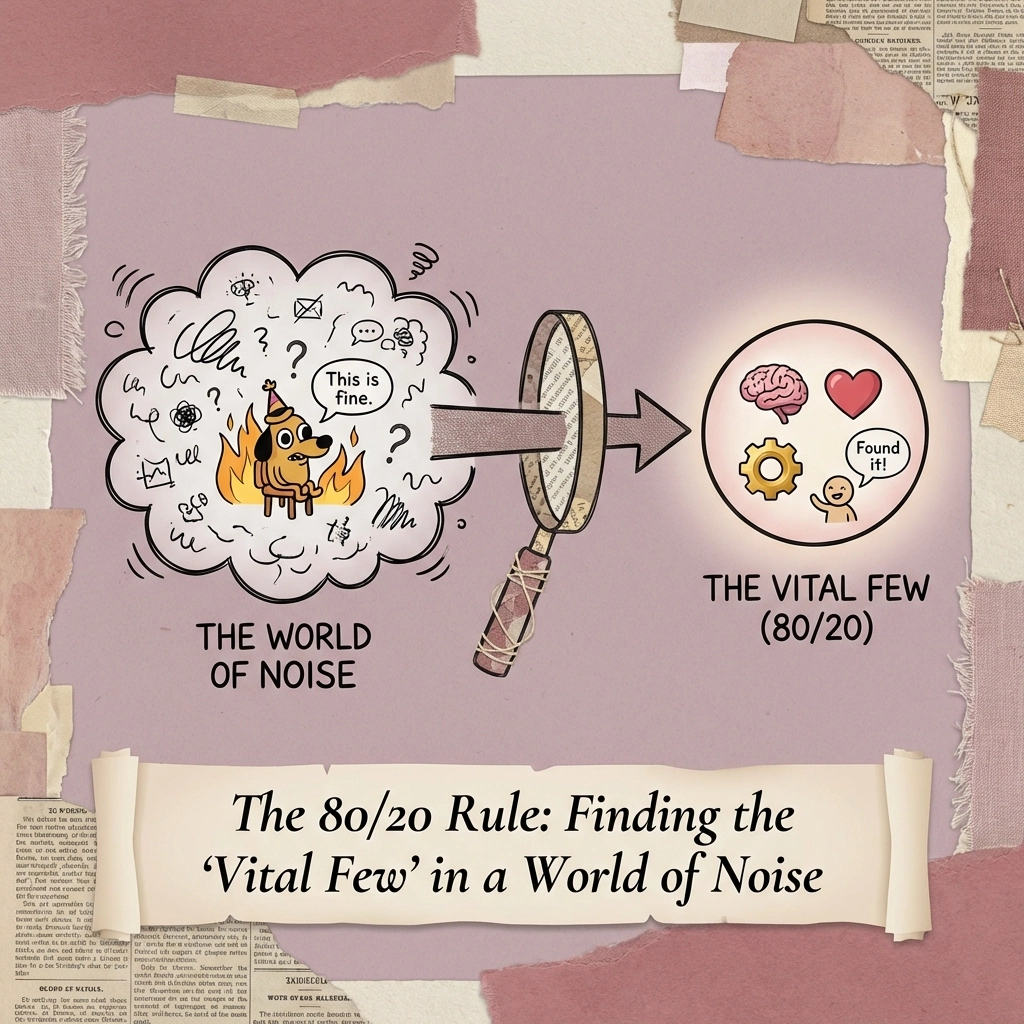
Most of what we do doesn't matter.
I know. That stings a little. But stay with me, because once you accept this uncomfortable truth, something remarkable happens. You stop drowning in the trivial many and start swimming toward the vital few.
This is the 80/20 rule. And it's not just an observation about productivity. It's a permission slip to let go of everything that's eating your time without feeding your results.
The Core Idea
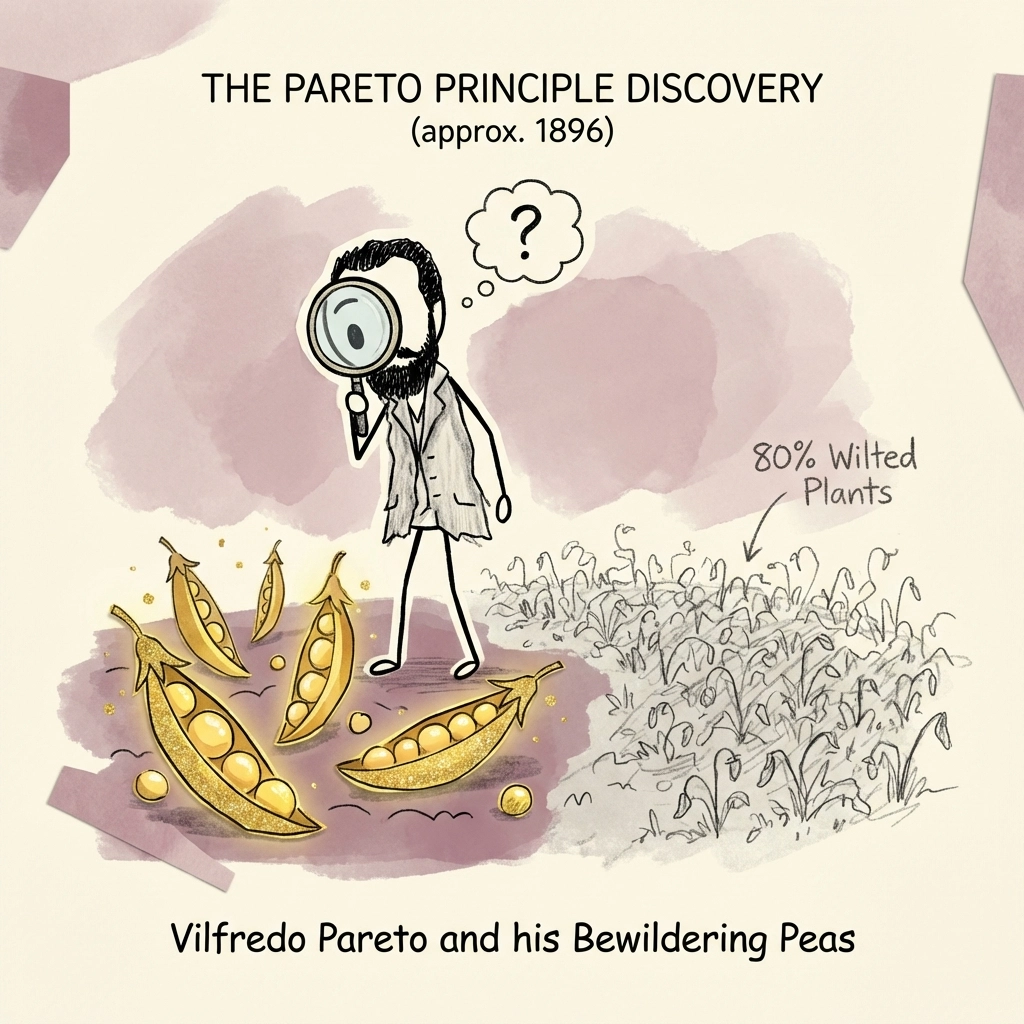
Back in the 1890s, Italian economist Vilfredo Pareto was puttering around his garden when he noticed something odd: 20% of his pea pods were producing 80% of the peas. Being an economist (and apparently a very observant gardener), he started seeing this pattern everywhere, including in Italy's wealth distribution, where 80% of the land was owned by 20% of the population.
The Pareto Principle was born. And it shows up everywhere.
Here's what most people miss: the 80/20 rule isn't just a fun fact for cocktail parties. It's an invitation to make ruthless choices about where you invest your energy.
The question isn't "how do I do more?" It's "what's the one thing that actually matters here?"
This is Systems Thinking in action. Once you train yourself to see these imbalances, you can't unsee them. And that's when the real work begins—deciding what to protect and what to release.
The 80/20 Shows Up Everywhere
| Company | The Vital 20% | The Result |
|---|---|---|
| Microsoft | 20% of the code caused 80% of the bugs | Prioritized review of problematic code → massive quality improvement |
| Apple | 20% of products generated 80% of revenue | Steve Jobs slashed the portfolio → focus on iPhone/MacBook catapulted profitability |
| Airbnb | Small fraction of hosts drove majority of revenue | Created "Superhost" program → primary driver of rapid growth |
| Photo filters and editing drove 80% of engagement | Perfected two core features → dominated social media | |
| Starbucks | 20% of store locations generated 80% of sales | Closed underperformers, doubled down on winners → maximized profit |
The numbers won't always be exactly 80/20. Sometimes it's 90/10. Peter Thiel notes in Zero to One that in venture capital, the best investment often outperforms the rest of the fund combined. The precision doesn't matter. The principle does: most results come from a minority of inputs.
At Work: Finding $2M in a Cloud Bill
When Contentsquare acquired Heap, there was immediate scrutiny on infrastructure costs. Heap's flexible architecture—unlimited custom events, retroactive analysis—was being compared to the parent company's more optimized stack. Leadership wanted cuts. Fast.
The naive approach would be to re-architect everything. High risk. Long timeline. Probably fail.
Instead, I ran an 80/20 analysis. We mapped every cost to business outcomes and found something beautiful: a small number of optimizations could drive the majority of savings. The vital few.
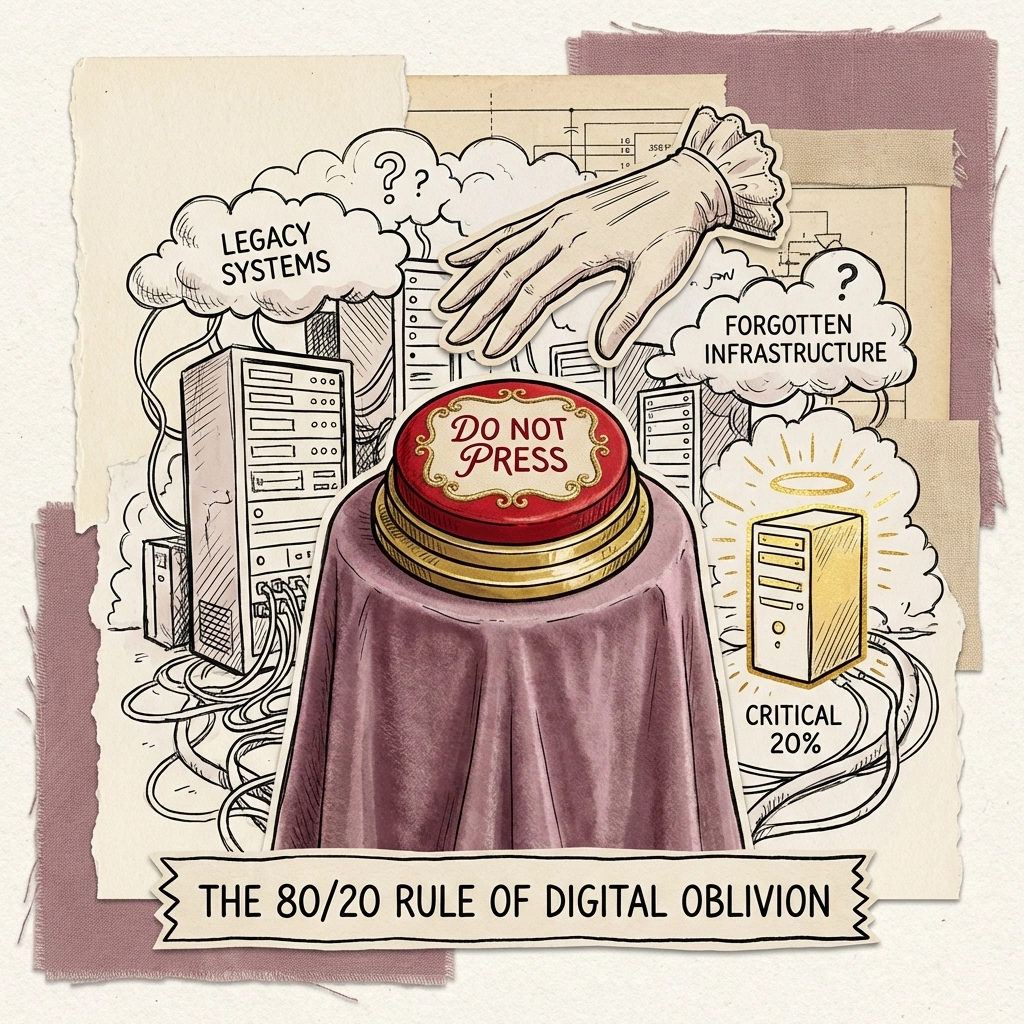
The four pillars that mattered:
Cloud Cost Alignment
Converting unused compute reservations into flexible savings plans
Legacy Decommissioning
Auditing and shutting down redundant clusters, old pipelines, inactive storage
Runtime Optimization
Fine-tuning storage, compute, and message queues
Tooling Consolidation
Migrating from expensive commercial tools to open-source alternatives
We sequenced by confidence: low-risk wins first to build momentum, then progressively more complex changes. Weekly COGS reviews kept everyone honest.
The result: $2M+ in annualized savings—not by working harder, but by distinguishing "necessary complexity" (product-driven) from "incidental complexity" (historical accidents nobody questioned).
You can read the full case study if you want the details. The short version: the 80/20 rule isn't just a nice idea. It's how you survive post-acquisition scrutiny.
The uncomfortable truth? A lot of what feels essential is actually just familiar.
Building Apps: The Instagram Lesson
When Instagram was a tiny startup called Burbn, it was a bloated mess—check-ins, planning features, photo sharing, and more. The founders could have kept building. Instead, they did something brutal: they looked at the data and found that photo filters and editing drove the vast majority of engagement.
So they killed everything else. They perfected those two features. The rest is history.
I experienced this exact tension when building BurnFriends—a mobile fitness app that helps friends walk more together. My brain wanted to build everything: chats, avatars, friend lists, badges, a whole tiny social universe.
But I forced myself to ask the Instagram question: What's the ONE thing that turns "I should work out" into "fine, I'll do it"?
The 80/20 answer: gamification that actually works. Just two things: a leaderboard for friendly competition, and a tamagotchi-style digital pet that thrives when you move and wilts when you don't.
The result: 200 concurrent users in 6 weeks—and half were strangers. That's how you know you found the vital few.
The lesson I keep relearning: every feature you add before validating the core idea is a distraction from learning whether anyone cares.
In Life: Protecting What Matters
The 80/20 rule isn't just a work thing. It's how I think about life.
What are the few activities that actually make me happy? What are the relationships that matter most? What are the habits that set up everything else?
Morning routine: The 20% (coffee, movement, one focused hour) that determines the quality of the other 80% of my day.
Relationships: The handful of people I'd drop everything for—the ones who show up when things get hard.
Commitments: Saying no to most things so I can say hell yes to a few.
My dad used to say, "Let's do something, even if it's wrong!" That energy is great for shipping apps. But the 80/20 rule adds an important filter: let's do the right something.
Most of us fill our calendars with the 80% that feels productive but doesn't move anything forward. Back-to-back meetings. Performative busyness. Obligations we agreed to six months ago when we had a different idea of what mattered.
The hard part isn't identifying the vital few. It's admitting that most of what we do is noise.
In Relationships: Quality Over Quantity
I used to feel guilty about not keeping up with everyone. Every unanswered text felt like a small failure. Every missed birthday was evidence that I was somehow falling short as a friend.
Then I did the math.
The 80/20 of connection: 20% of the people in your life probably provide 80% of your support, joy, and growth.
This isn't permission to be a bad friend. It's permission to stop spreading yourself so thin that nobody gets the real you. A few deep relationships are worth more than dozens of shallow ones.
Invest accordingly.
How to Apply This
Ready to find your vital few? Here's the framework I use:
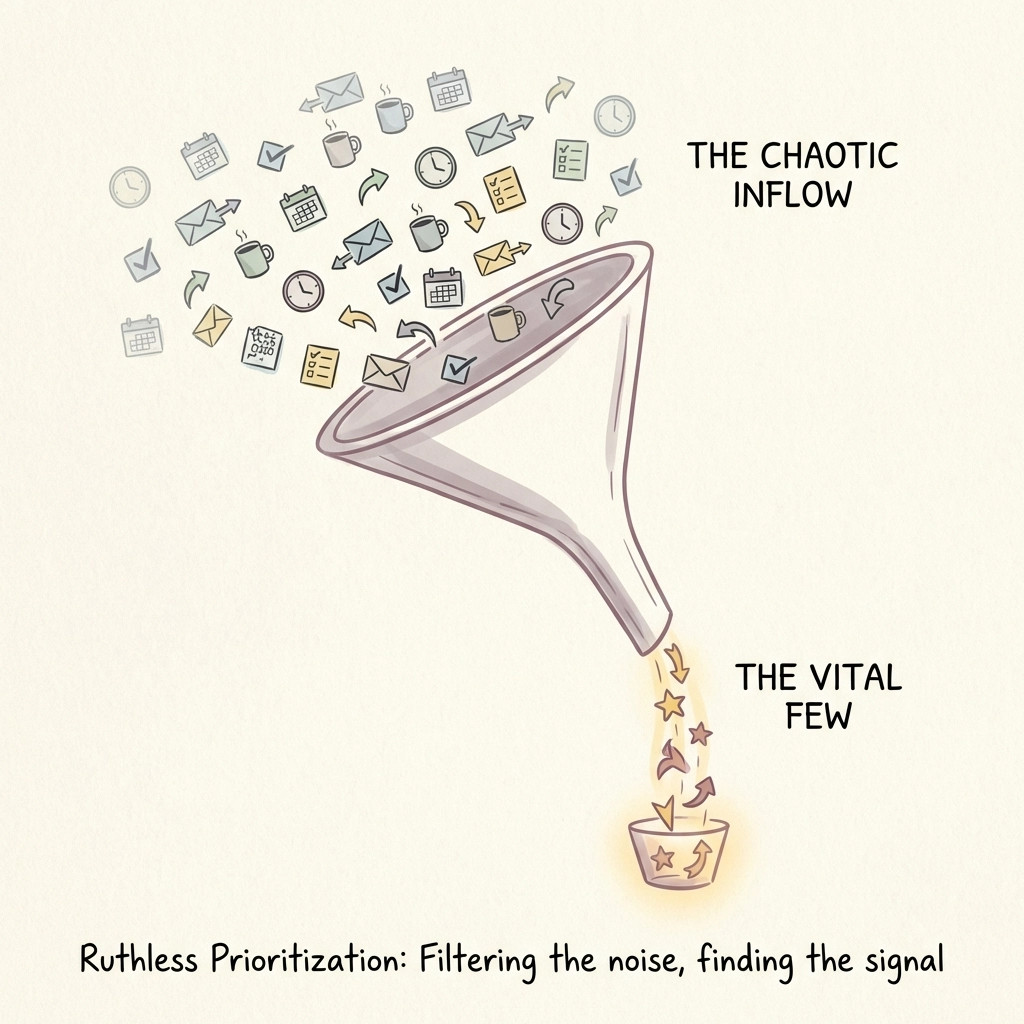
1. Audit Ruthlessly
List everything you're spending time, money, or energy on. Be brutally honest about what's actually driving results versus what just feels important.
2. Find Your 20%
What are the few things that, if you went all in, would make the biggest difference? In your work? In your relationships? In your own wellbeing?
3. Let Go of the Rest
This is the hard part. The 80% feels important. It's familiar. It's comfortable. It might even be good.
But good is the enemy of great. Kill it, delegate it, or stop feeling guilty about ignoring it.
4. Protect Your Focus
Once you know your 20%, guard it like your life depends on it. Because in a lot of ways, it does. Every "quick favor" and "small ask" is a distraction dressed up as an opportunity.
The Takeaway
Most of what we do doesn't matter.
The freedom—the actual, life-changing freedom—is in accepting that. And then pouring yourself completely into the things that do.
The vital few are waiting. The trivial many will always be there, demanding attention, creating noise, promising importance.
Choose wisely.
Want help finding your 20%?
Whether it's auditing your platform architecture or clarifying your strategic priorities, I help teams cut through the noise and focus on what actually moves the needle.
Let's talk →